
You’ve got a bag of pork bones that look, kind of grim. They’re pale, they’re bony, they look like something your dog would give up on. You plop them into a pot of water that’s as clear as a mountain spring. You turn on the heat, walk away, and think, “Let’s see what happens.”
Hours later, you wander back into the kitchen. The air smells incredible—like a pork roast doing yoga. You lift the lid, expecting maybe a nice, golden soup.
Whoa. Hold up.
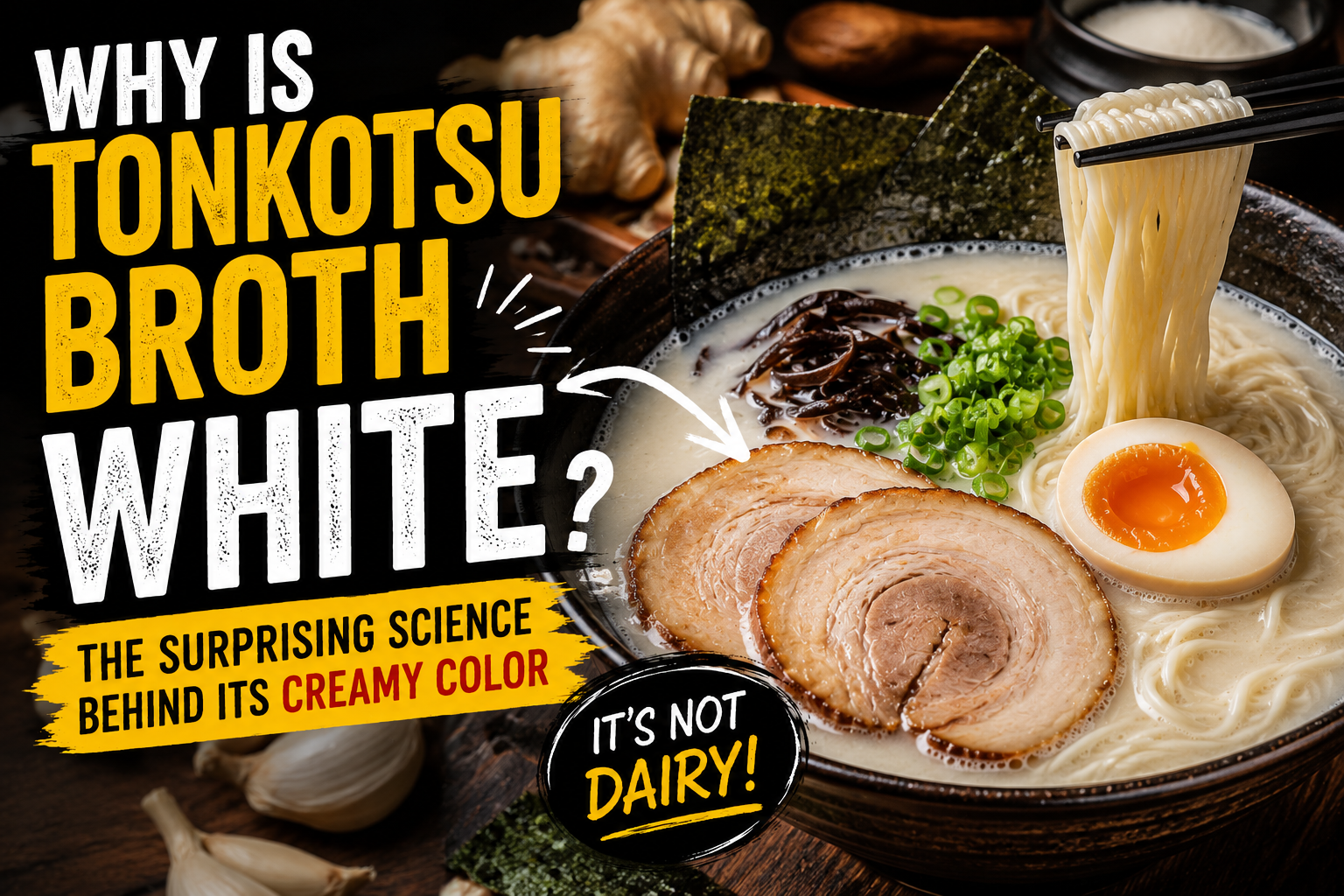
That clear water? It’s gone. In its place is something that looks like a wizard’s potion. It’s creamy. It’s white. It’s so opaque you could write your name in it. Your first thought? “Did I accidentally pour in a quart of milk? Did my pot have a secret affair with a cloud?”
Nope. You, my friend, just unlocked one of the coolest tricks in the kitchen. You made tonkotsu broth. And that insane transformation from “boring water” to “liquid silk” isn’t magic. It’s better. It’s science throwing a party in your pot. Let’s crash it.
The Unlikely Heroes (Pork Bones, Who Knew?)
Forget fancy steak. The real MVP here is the stuff we usually throw away. We’re talking pork leg bones, feet (trotters—yes, really), and neck bones. These aren’t the glamorous cuts. They’re the blue-collar workers of the pig. They’re packed with collagen (the body’s glue), marrow (the delicious butter hiding inside), and all sorts of chewy connective tissue. They’re basically flavor crystals, waiting for the secret password.
Most recipes have you give them a quick bath or blanch first. This isn’t just for fun. It’s like hosing down your car before a fancy date. It washes off the impurities (that weird gray foam) so your final broth tastes pure and clean, ready for its big debut.
The Raging Boil (This is Not a Drill!)
Here’s where most soups and tonkotsu have a dramatic breakup. For chicken noodle, you simmer. It’s gentle. It’s polite.
Tonkotsu is not polite.
For this broth, you need a rolling, raging, “is-my-kitchen-okay?” boil. For HOURS. We’re not talking a few bubbles. We’re talking a full-on volcanic eruption in there. This violent, churning chaos is the key. It’s like a washing machine on its heaviest cycle, constantly beating up the bones, shredding tissue, and creating total pandemonium. And in that chaos, something beautiful is born.
The Big Reveal: The Science of “Bone Milk”
Okay, here’s what’s actually going on inside that wild pot. It’s a three-act play inside your Dutch oven.
Scene 1: The Great Collagen Escape. Remember that collagen? It’s a tough protein that holds bones together. After hours of a boiling water torture session, it finally breaks. It surrenders. It dissolves into the water, turning into something called gelatin. This is what makes the broth feel rich and slick in your mouth—that wonderful, lip-sticky body.
Scene 2: Fat Checks In. While that’s happening, the marrow and fat inside the bones are melting. They’re releasing liquid gold—flavorful pork fat—right into that gelatin-rich water.
Scene 3: The Miracle Mix-Up (The EMULSION). Now you’ve got oil (fat) and water (gelatin broth). As anyone who’s made salad dressing knows, these two refuse to hang out. They separate. It’s awkward.
But! In our crazy, rolling pot, they don’t have a choice. They’re forced together. And the gelatin acts like the world’s tiniest, tastiest bouncer. It coats every microscopic droplet of fat, stopping them from clumping back together. These zillions of tiny fat droplets get suspended forever in the broth.
But why does it turn WHITE? Great question. Think of a snowbank. One snowflake is clear. But a billion of them together look white. Same with your broth. All those microscopic fat and protein particles scatter light in every direction. When light gets bounced around like a pinball, our eyes just give up and say, “Yep. That’s white.” It’s the same reason milk is white! Your tonkotsu is basically meat milk. (You’re welcome for that phrase.)
The Backup Singers: Time, Heat, and Faith
- Patience is a Ingredient: You can’t rush this. The long, brutal heat is what coaxes everything out of the bones.
- The Bones Give Up Everything: They literally start to fall apart, adding tiny particles of marrow and minerals to the mix, making it even creamier and richer.
- The Flavor Friends: Garlic, onion, ginger—they often join the party later. They’re there for the flavor concert, but they didn’t create the white stage. That was all bone.
Myths We Gotta Bust Right Now
- “You need to add cream.” NOPE. Traditional tonkotsu is just bones and water. The creaminess is 100% stolen from the bones themselves. It’s a heist.
- “It’s the bone dust that makes it white.” Not quite. It’s the emulsion—the forced marriage of fat and water—that does the trick.
- “A little simmer is fine.” Try it! You’ll get a clear, tasty broth. For the creamy white magic, you need the rolling boil. No compromises.
How to Be a Broth Wizard at Home
- Bone Squad: Get a mix! Some marrow bones for richness, some trotters for that awesome collagen.
- Keep the Party Rolling: That boil is your best friend. Check on it now and then, give it a stir, top it off with a bit of hot water if it gets low (cold water will shock the poor emulsion).
- If It Breaks, Don’t Sweat: If your broth looks a little sad or separates, your emulsion just got shy. Blend it! A minute in a blender will whip those fat droplets right back into a creamy, white, happy family.
The Happy Ending
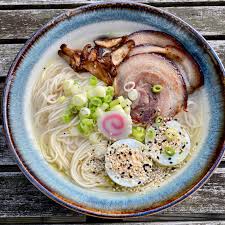
So there you have it. The journey from “meh” to “WOW” is just beautiful, simple science:
Bones + Water + Raging Boil = Gelatin + Fat Forced to Be Friends = A Zillion Tiny Light-Scattering Droplets = That Gorgeous White Broth.
That color is your trophy. It’s proof that you turned patience and physics into a bowl of liquid gold. It’s not magic. It’s just a pot of water, some forgotten bones, and a little bit of kitchen rebellion. Now, go make some cloud soup. You’ve earned it.
Sources:
1. McGee, Harold. On Food and Cooking: The Science and Lore of the Kitchen (Scribner, 2004). This is the bible of food science for cooks. The chapters on “Meat” and “Stocks and Soups” explain in detail how collagen denatures and hydrolyzes into gelatin in the presence of water and heat.
2. “Food Emulsions: Principles, Practices, and Techniques” by David Julian McClements (CRC Press). While academic, it’s the definitive text on the subject.
3. A great explanatory article comes from “The Kitchn” in a piece titled “Why is Milk White? The Chemistry of Color”. It directly explains that the white color in milk (and by perfect analogy, tonkotsu) is caused by the scattering of light by suspended fat and protein particles. You can reference this phenomenon as “light scattering” or more specifically “Mie scattering” in colloidal dispersions.
4. Chef Ivan Orkin’s writings and interviews about tonkotsu (in his book Ivan Ramen or interviews on sites like Eater or Taste). He relentlessly emphasizes the non-negotiable, rolling boil as the mechanical key to creating the emulsion and extracting maximum material from the bones.
5. The USDA FoodData Central database provides compositional analysis of cuts of meat, including collagen content. For a more narrative take, books like “The Whole Beast: Nose to Tail Eating” by Fergus Henderson celebrate the use of bones, trotters, and other collagen-rich parts, explaining their culinary importance.