

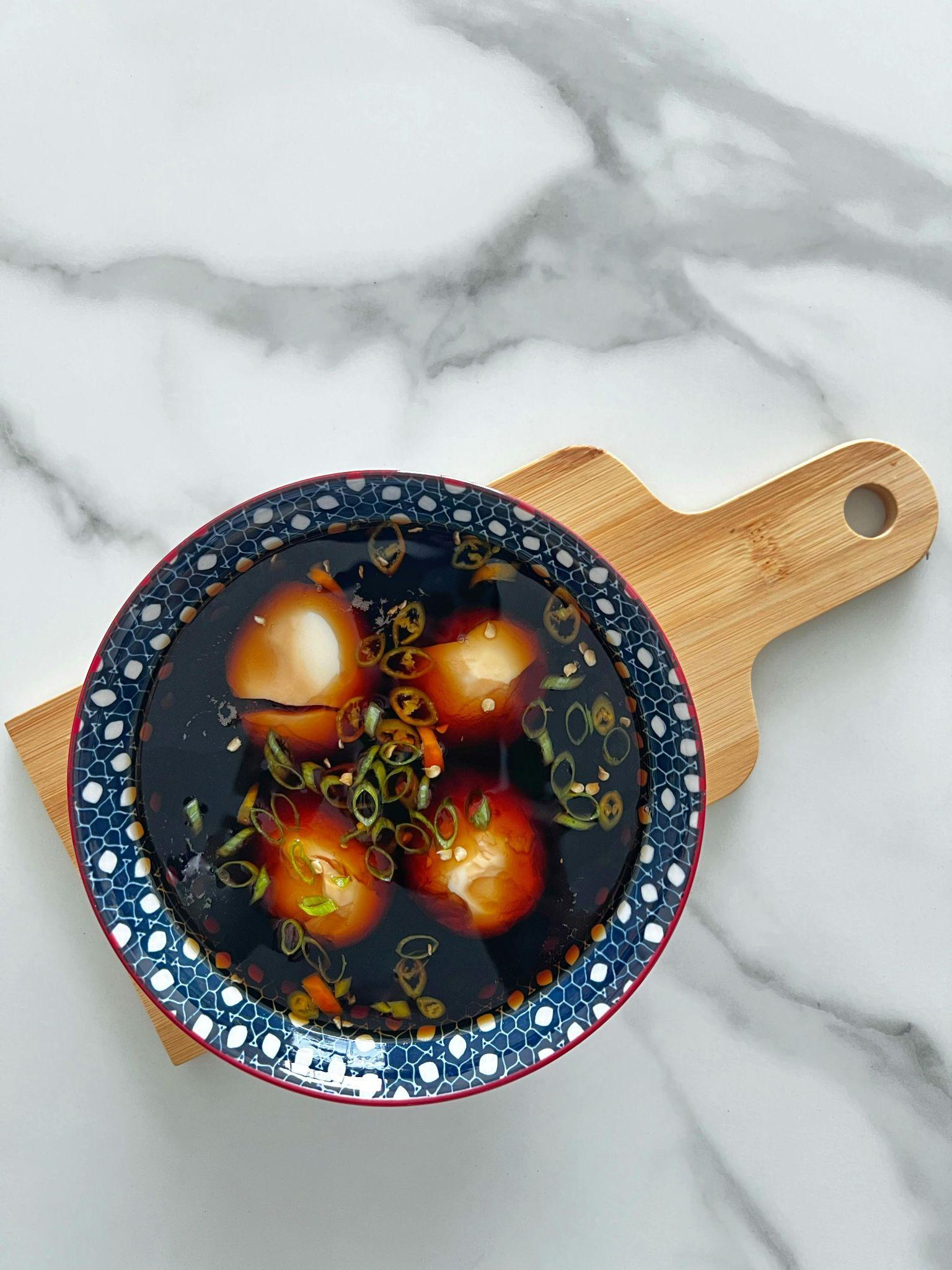
Every authentic Japanese ramen egg recipe showcases a perfectly soft-boiled egg with a rich, custardy yolk. These soft, creamy, and silky ramen eggs deliver an irresistible burst of umami flavor the moment you take a bite.

Whether it’s late at night and you’re craving a homemade bowl of ramen topped with your favorite marinated soft-boiled eggs, or you’re dealing with a hangover and need something comforting to reset your system, worry no more. I’m going to guide you through these simple steps to create the ideal ramen eggs, also known as 味付け卵 (Ajitsuke Tamago) in Japanese.
Note: This post contains affiliate links. If you click through and make a purchase, we may earn a commission at no additional cost to you. Thanks for your support!
What are ramen eggs?
Ramen eggs, also called 味付け卵 (Ajitsuke Tamago), are soft-boiled eggs renowned for their jammy, custard-like texture and umami-rich yolk that completes every authentic Japanese ramen recipe. They are the perfect complement to any Japanese ramen dish.
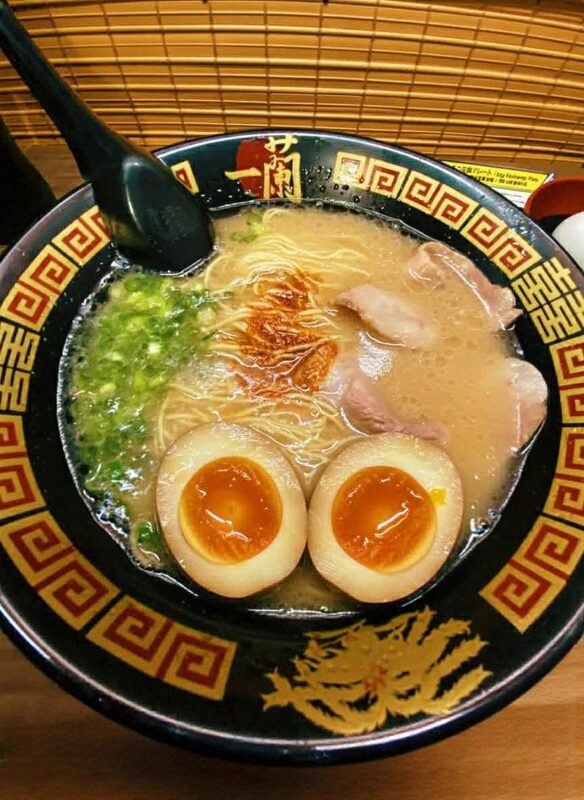
Photo by Jaro Abad, October 2023, Osaka, Japan
Ingredients for Ramen Eggs 味付け卵 (Ajitsuke Tamago)
- 1 tablespoon sugar
- 4 tablespoons soy sauce
- 3 tablespoons water
- 2 tablespoons mirin
- 6 eggs
Overall Preparation Time for Ramen Eggs 味付け卵 (Ajitsuke Tamago)
🕓 Prep Time: Approximately 25-30 minutes
🕓 Cooking Time: Approximately 10 minutes
🕓 Marinating Time: Approximately 7-8 hours
🕓 Total Time (including marination): Approximately 7.5-8.5 hours
How to Make an Authentic Ramen Egg Recipe
1. Preparing soft-boiled eggs
Bring water to a boil in a pot. Gently add the eggs and cook for 7 minutes to achieve the perfect runny yolk texture.
After boiling, transfer the eggs immediately to ice-cold water to stop the cooking process and prevent overcooking from residual heat. Let them sit for approximately 15 minutes.
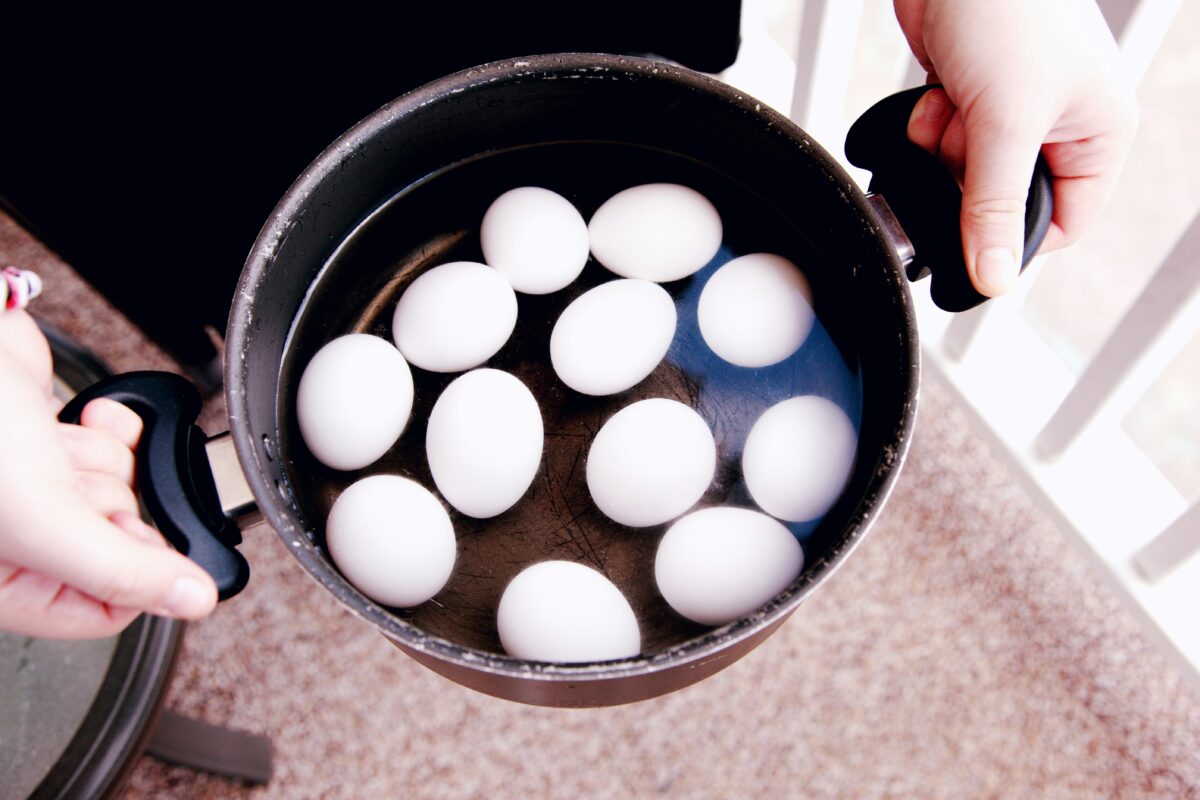
Photo by Alexander Grey via Unsplash
2. Prepare the marinade
Combine all the marinade ingredients (except the eggs) in a pot and bring to a boil. Allow the mixture to simmer briefly, then remove from heat.
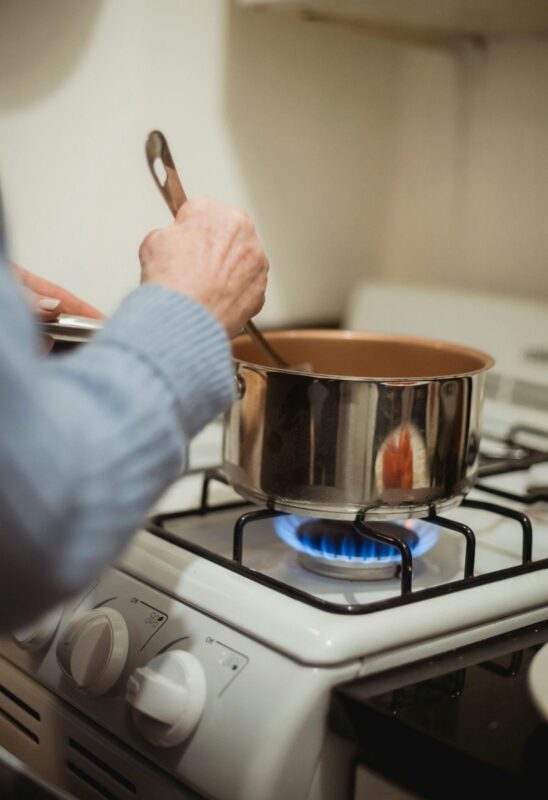
Photo by Teona Swift via Pexels
3. Dipping the eggs into the sauce
Pour the cooled marinade into an airtight container, such as a resealable bag or plastic container.

- Keeps Food Fresh 4x Longer – Extend your food’s shelf life by storing them in our vacuum seal containers. The vacuum seal pump removes the excess air inside the storage containers while its lid locks in freshness.
- Dishwasher, Microwave, Oven Safe and Freezer Safe- You can heat your food in the microwave, or cook in oven safe up to 725F and Freezer safe up to -4 degree. Just remove the lid before heating.
- Enhances Marinade Flavors – Marinate your fish, vegetable, and meat in this vacuum storage container. Our vacuum seal storage containers allow the flavors to deeply penetrate into the meat while locking in freshness, which further improves taste.
- Safe and Durable Glass Containers – We created each vacuum container with Premium Borosilicate Glass, BPA Free, Food Safe.
- What to Store – Mealprep for a week, and great for lunch to go Bento box Fresh meats, sauces, cold cuts, all kind of cheeses Ready to bake meals such as mac&cheese, baked ziti etc. Leftover foods from take out, fruits, vegetables, salads, dry foods etc

If using a resealable bag, be sure to expel all the air before sealing it tightly.
Gently crack the eggshell by tapping it lightly. To make peeling easier, you can use a spoon to lift the shell under the membrane or peel the eggs underwater. Once fully peeled, immerse the eggs in the cooled marinade.
Note: Ensure the marinade is completely cool before submerging the eggs to avoid cooking them further.
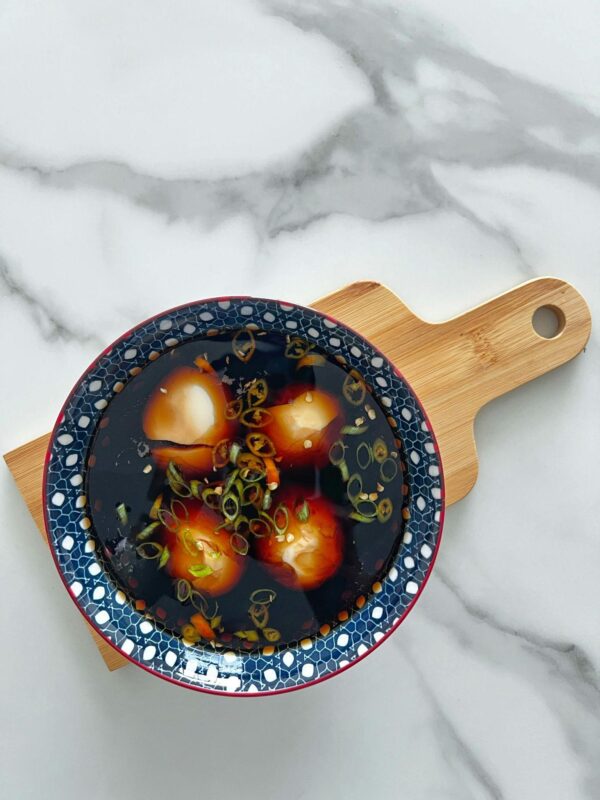
Photo by Anya Dunes via Pexels
4. Marinate overnight
Refrigerate and let the eggs marinate for 7 to 8 hours before serving. If short on time, you may taste the eggs after 1 to 3 hours, but this will result in a less intense flavor compared to the full 7-8 hour marination.

Photo by Meruyert Gonullu via Pexels
5. Serve
Remove the eggs from the marinade and cut them in half. These 味付け卵 (Ajitsuke Tamago) make an excellent pair to any ramen dish or can be enjoyed on their own!
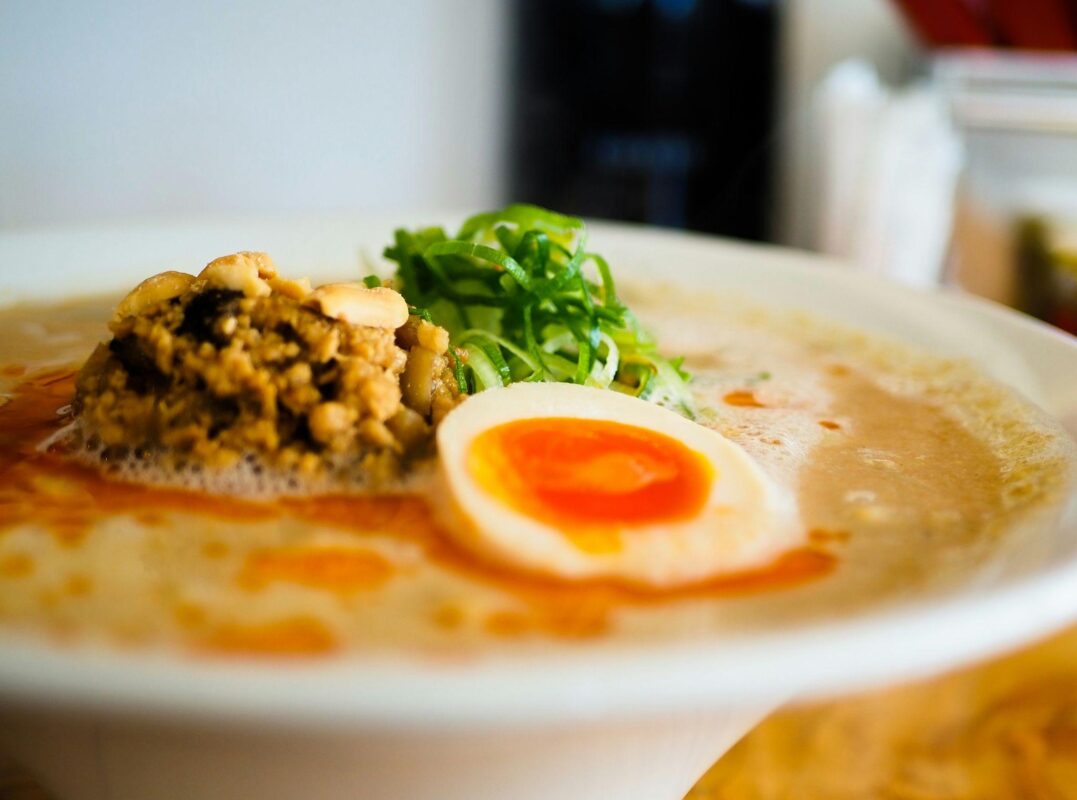
Photo by Yuika Takamura via Unsplash
Storage Tips
Always keep the eggs refrigerated and avoid freezing. Turn them occasionally to ensure even seasoning throughout.
Notes
- It is best to prepare a fresh marinade for each new batch of ramen eggs, as the leftover sauce loses its richness after soaking previous eggs and their absorbed umami.
- Leftover marinade can be repurposed to season omelets, stir-fries, and various other dishes.
Nutritional value
| Calories | 139.5 kcal |
| Carbohydrates | 3.15 g |
| Lipids (fats) | 8.55 g |
| Protein | 10.8 g |
| Salt | 1.8 g |
Disclaimer: The nutritional values provided are estimates based on typical egg content and may vary depending on egg size, brand, and preparation methods. Use this as a general guide rather than exact measures.
Resources & Related Guides
- SIROGohan – Traditional Nitamago Recipe
- Minami Anzu via Delish Kitchen
- Nami Hirasawa Chen via Just One Cookbook