
By Candace Santiago
You know that soy sauce bottle in your pantry? The one you’ve had for months? You use it, and it works. It makes stir-fry taste like stir-fry. But if you’re anything like me, you’ve probably wondered: is this it? Is this what soy sauce is supposed to be?
A while back, I noticed some chefs and food people I follow kept mentioning a brand called MOMOFUKU for their pantry staples. So, I looked into it, specifically their soy sauce and tamari. Turns out, the difference isn’t just hype. It comes down to a few deliberate choices—things most big brands don’t bother with because they’re more expensive or time-consuming.
Let’s talk about what those choices are, without the foodie jargon.
First, look at the back of the bottle.
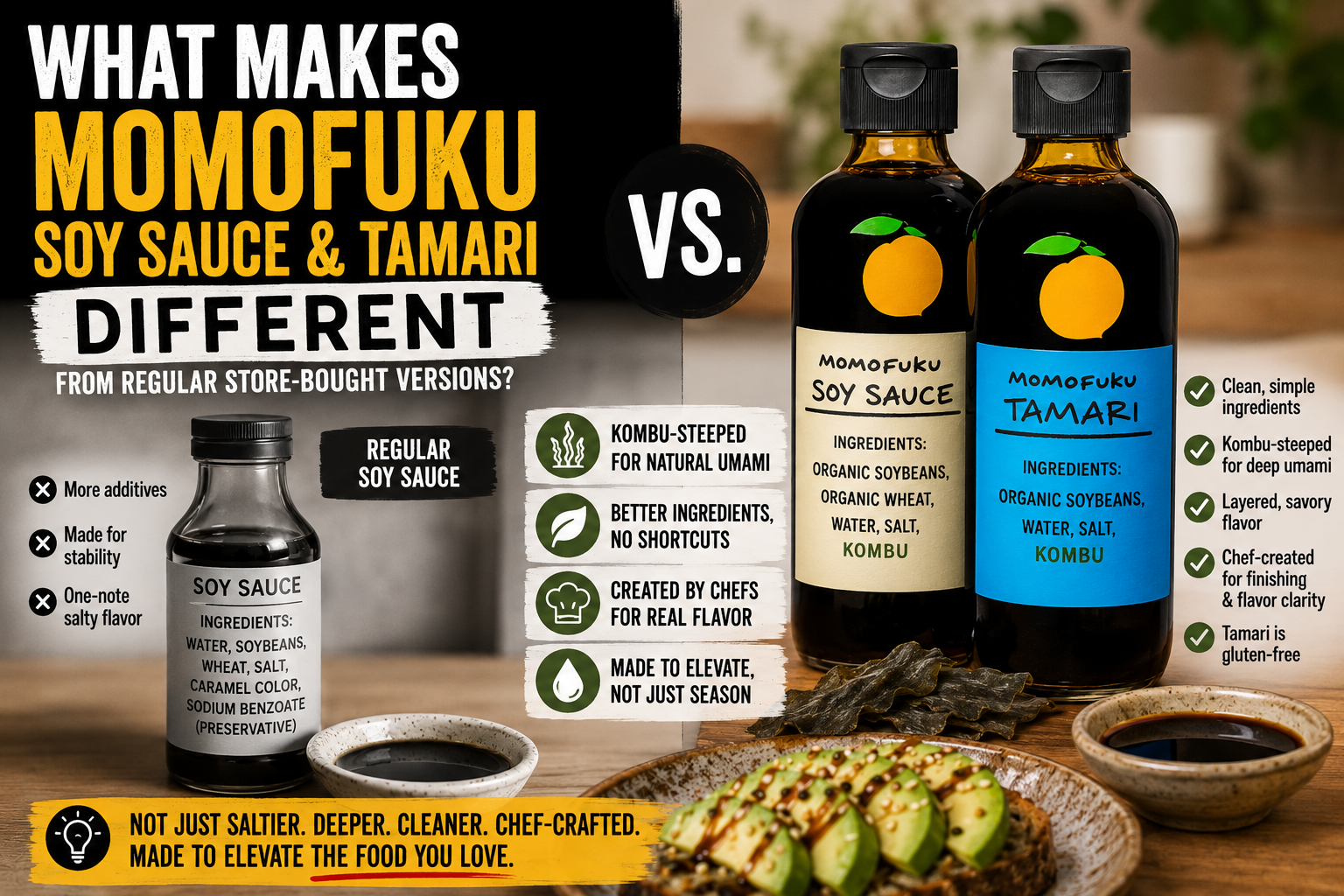
Grab your regular soy sauce. Read the ingredients. You’ll probably see water, soybeans, wheat, salt, and then maybe things like “caramel color” or “sodium benzoate” (a preservative). Nothing alarming, but clear signs of a product made for stability and long shelf life.
Now, look up the ingredients for MOMOFUKU Soy Sauce: organic soybeans, organic wheat, water, salt, kombu.
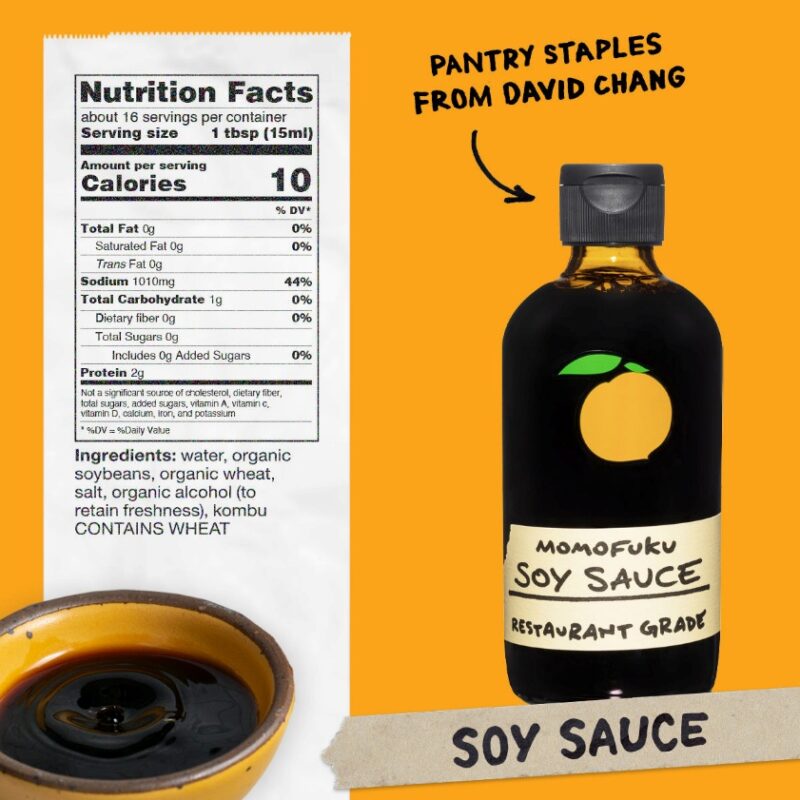
That’s it.
The organic part means the crops are grown differently, which matters, but the real standout is the last item: kombu. That’s dried seaweed. You won’t find that in your standard bottle. They add it for a reason.
Why add seaweed to soy sauce?
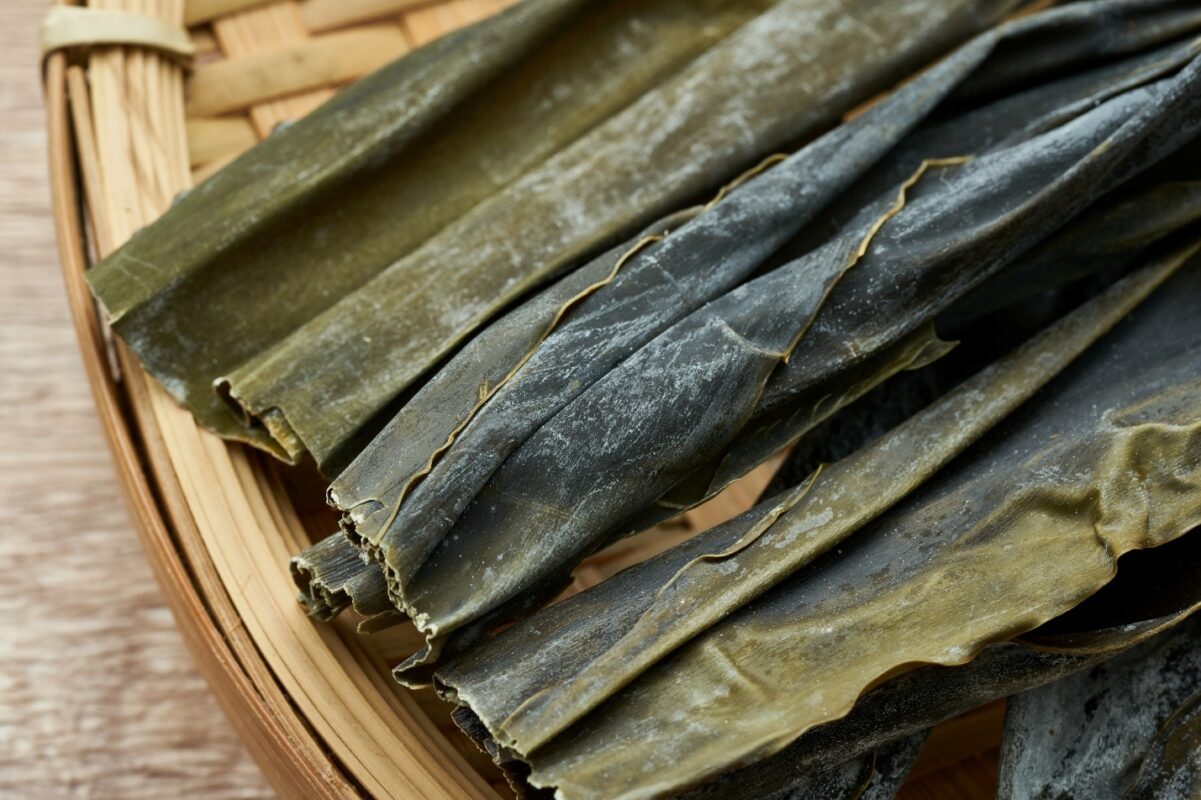
This is where it gets interesting. Kombu isn’t just a random extra. In Japanese cooking, kombu is the foundation for dashi—a broth that’s all about savory depth, or what we now call umami. It’s naturally packed with compounds that make food taste profoundly satisfying.
After MOMOFUKU brews their soy sauce the traditional way, they do something extra: they steep finished kombu in it. It’s like making tea. The savory essence from the seaweed slowly infuses into the liquid.
Most big manufacturers skip this. It’s an extra step that costs time and money. But it changes the flavor completely. Instead of a one-note salty punch, you get a more rounded, layered taste—salty, yes, but with a brothy, savory quality that stays on your tongue.
Who decided to do this?
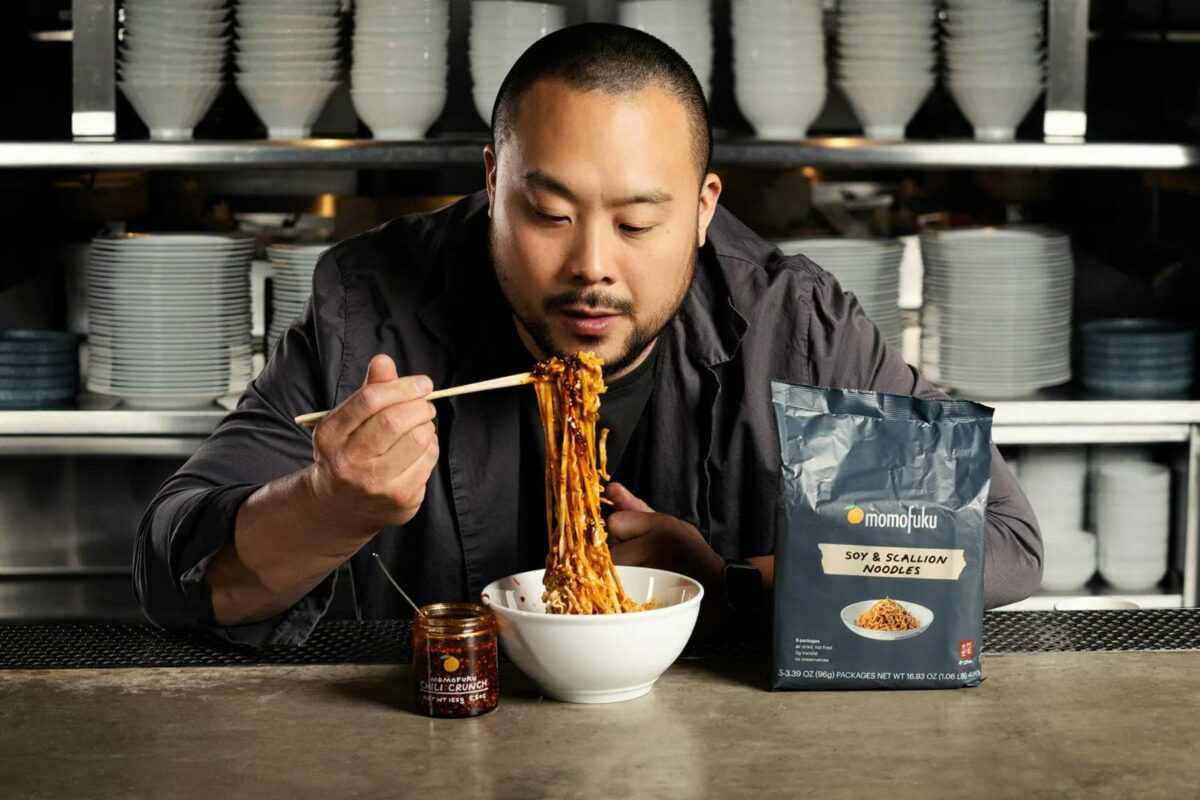
This part helps make sense of it. MOMOFUKU isn’t a faceless food corporation. It started with a restaurant group founded by David Chang. In his kitchens, they couldn’t find a soy sauce that met their standards—one clean and deep enough to use as a finishing touch, not just a hidden seasoning. So they decided to make their own, the way they wanted it.
That’s the spirit behind these bottles. They’re not trying to replace your everyday soy sauce for every single use. They’re offering a version made with a chef’s mindset: start with better ingredients, don’t cut corners for efficiency, and aim for a specific kind of flavor clarity.
What does this mean when you’re cooking?
It means you might reach for a different bottle depending on the moment.
Your regular soy sauce is still useful. When you’re dumping a couple of tablespoons into a big marinade or a pot of sauce with ten other ingredients, its simpler, sharper profile is fine.
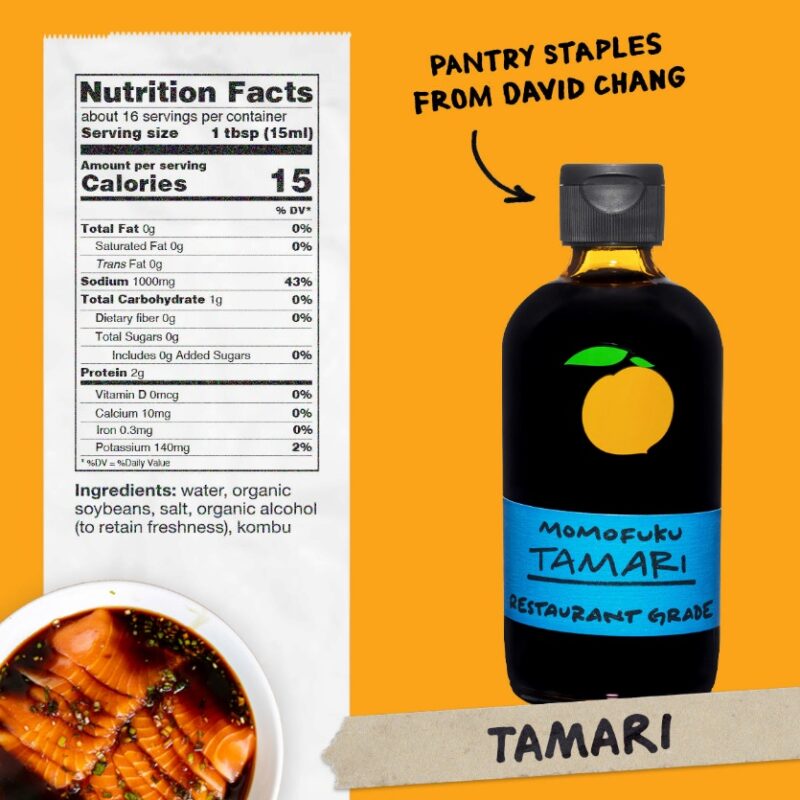
But when the sauce is the point—when you’re drizzling it over avocado toast, finishing a piece of fish, or making a simple dipping sauce where you’ll actually taste it—that’s where you notice the difference. The MOMOFUKU versions taste less like a bolt of salt and more like something with its own character. The tamari, being gluten-free and even more soy-forward, feels especially rich and smooth.
So, is it worth it?
That depends on how you cook. If you view soy sauce purely as a background seasoning, your current bottle is probably just fine.
But if you’ve ever been curious about why restaurant food sometimes tastes so deeply savory, or if you want a gluten-free tamari that doesn’t feel like a compromise, or if you just enjoy having one or two “good” versions of pantry staples for when it matters—then the difference here is real.
It’s in the cleaner ingredient list. It’s in the kombu-steeping step most brands skip. And it’s in the intention: to make a soy sauce good enough for a chef to use openly in their restaurant, not just hide in a wok.
You don’t need to throw out your old bottle. But now you know what the other one is for.
If you’re curious to try the difference for yourself, you can find the MOMOFUKU Soy Sauce and Tamari here.
Disclosure: This post may contain affiliate links. As an Amazon Associate, this page earns from qualifying purchases. If a purchase is made through these links, a small commission may be earned at no extra cost. Ingredients and products featured here are selected because they complement the recipe or dish highlighted in the post.